
How to Win at Strategy with Business Brilliance
What’s the difference between your business succeeding on purpose versus succeeding (or failing) by accident?
The biggest difference is strategy.
Most companies don’t do things by accident because they lack a strategy (although a lot of businesses don’t have one) — it is because they don’t know how to make their business plan or strategy real. It lives in a folder, on the wall or in a drawer, if it lives at all.
Businesses that achieve their goals on purpose have their strategies live right throughout their organisation daily, weekly, monthly.
Strategy is supposed to create clarity and direction. But in most organisations, it turns into another document filed away after the offsite. Execution drifts. Distractions dressed up as opportunities take up focus. Urgent work takes priority over important work. Momentum fades. And people go back to achieving by accident.
We recently dug into a great article by McKinsey on what "Strategy Champions" actually do differently.
McKinsey’s How Strategy Champions Win argues that winning strategies hinge less on planning and more on execution. The standout performers mobilise their organisations, make bold, high-impact moves, and treat strategy as a dynamic, adaptive process— not a static plan. It’s not about having a strategy, but about making it real.
While we’re not known for quoting McKinsey. But credit where it’s due: their recent piece, How Strategy Champions Win , cuts through some of the usual corporate fluff and lands on a few hard truths.
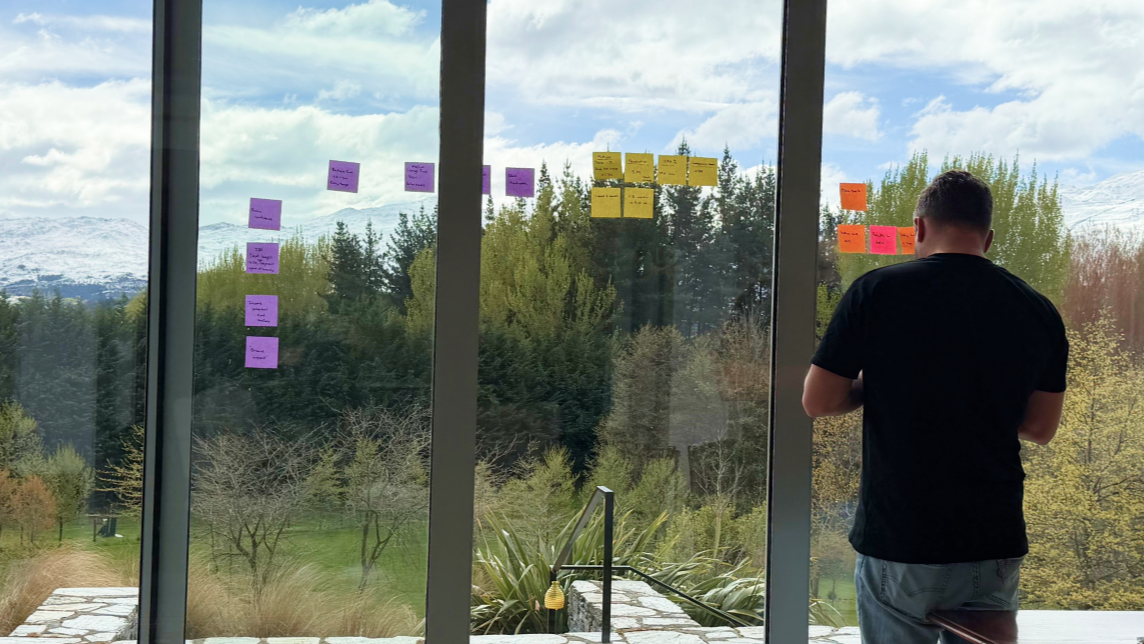
In our work at Point16, we see the pattern constantly: The companies achieving on purpose aren't the ones with the longest strategy documents, or the most clever plans. They’re the ones who double-down on mobilisation, bold choices and relentless execution.
The article isn’t perfect (surprise: we have some builds), but it gives a great insight on where most strategy work breaks down.
Here are three key insights we liked, plus what they remind us of in the work the team do everyday at Point16.
1. Mobilisation is the “gap point”
“The biggest gap between Strategy Champions and stragglers is actually in mobilization — the crucial phase of translating strategic choices into organizational readiness.”
— McKinsey & Company
What we like / call out:
Lots of strategy discussions focus on vision, position or mission statements and robust planning on how to get there. McKinsey flips the script: making choices is easy. Getting the company (or org as they put it) to care, commit, and act is where most fall short.
At Point16, we see this play out all the time, the strategies that succeed aren’t the smartest on paper, they’re the ones that show up in the team’s daily, weekly, and monthly rhythms. They live in WIPs, sprint reviews, and monthly check-ins — not in slide decks or annual planning folders. The rhythm sustains the result.
How this shows up at Point16:
Mobilisation breaks down when no one truly owns the doing. That’s why we ensure every initiative identified to improve the business needs an Initiative Owner — the person responsible for driving progress, keeping priorities visible, and ensuring momentum doesn’t fade between workshops. This doesnt mean the owner needs to do all the work, simply that they’re responsible for momentum and keeping the priority alive.
How you can close the mobilisation gap:
Appoint an Initiative Owner: for every key strategic move for anything where you are working “on” the business — someone empowered to make decisions and unblock progress.
Create accountability loops: short, frequent check-ins that focus on progress and learning, not just reporting. Ensuring owners know they are going to be held accountable ensures momentum.
Embed strategy into existing rhythms - but keep it distinct: carve out dedicated time within regular meetings for on the business discussions, separate from day-to-day operational updates. This ensures strategic thinking doesn’t get crowded out by immediate or urgent tasks.
Keep the narrative alive: celebrate wins, tell progress stories, and regularly reconnect teams to why the strategy matters.
When ownership, rhythm, and accountability come together, strategy stops being a document of intent, it becomes a living system of action.
Creating momentum working on the business becomes exciting and feels effortless when you set this up well.
2. Bold moves (with disciplined trade‑offs) shift the power curve
“Pursuing several of these moves simultaneously offers the best chance of substantially changing your company’s performance trajectory.”
— McKinsey & Company
What we like / call out:
McKinsey isn’t preaching “play it safe.” They’re saying your strategy has to move the needle, not just incrementally improve. That said, the list of “big moves” feels a little formulaic (of course M&A is there) but it gives direction to leaders who otherwise hedge too much.
Their real point isn’t just “be brave.” It’s “be bold and disciplined.” The companies that leap ahead aren’t making dozens of small improvements, they’re making a handful of decisive, resource-heavy moves that reshape their business.
Think of M&A, major capital shifts, or productivity breakthroughs. Yes, they’re big-company examples, but the logic scales down: growth comes from committing deeply to a few transformative priorities (think selling in new markets, launching ancillary product lines, bundling a new pricing model) — and stopping investment in the rest.
How we make this real at Point16:
At Point16, we see that bold doesn’t have to mean big — it means decisive. The leaders who move fastest are the ones who identify their few truly high-impact plays and ruthlessly discard the distractions. They know that every “maybe later” project quietly consumes time, headspace, and resources that could power something meaningful.
It also shows up when specific moves do feel risky or expensive. In these cases we create “experiments”. How can we test the move on a smaller budget to give our clients greater confidence and tilt the risk / reward scale in their favour.
How you can apply this mindset:
Define your big moves: the 2–3 decisions that will genuinely shift your results, not just maintain them.
Name your trade-offs: be explicit about what stops, pauses, or gets less attention to make space for what matters.
Cut distractions fast: if an initiative doesn’t drive the strategy, park it, delegate it, or delete it. Every week you delay costs momentum.
Resource with conviction: time, budget, and talent follow the priorities. Spread them thin and nothing moves.
Celebrate focus: reward progress on what matters, not motion across everything.
Bold moves without discipline are noise. Discipline without boldness is inertia. The sweet spot — and the power-curve shift — sits squarely in between.
3. Strategy must test, learn, adapt
Strategy Champions “are stronger … at testing, learning, and adapting their strategy as needed … launching a new strategy design effort in pursuit of the next S‑curve.”
— McKinsey & Company
What we like / call out:
We love that McKinsey embeds dynamism into strategy. The world changes fast and strategies should too. That said, the article doesn’t fully confront how messy that is in real-world, somtimes political, and resource‑scarce environments. But as a north star, yes, strategy must be a living thing.
How we keep strategy alive at Point16:
At Point16, we see that strategy doesn’t fail because it was wrong when it was developed — it fails because it’s static. The most successful teams treat their strategy like a working prototype, not finished or “perfect”. They stay curious, gather evidence, and make small course corrections before things drift too far off track.
How to build this mindset:
Make reflection a part of routine: not a post-mortem. Create space every month to check what’s working, what’s changing, what’s evolving and what’s not.
Zoom out regularly: every six months, step back and test whether your assumptions still hold.
Use data, not gut feel: faith beats facts when facts are scarce. Decisions anchored in evidence when data is available beats faith every time.
Document and revisit assumptions: it’s easier to adapt when you know what’s changed.
At its best, strategy isn’t a plan it’s an ongoing evolution between intent and reality.
The leaders who win aren’t the ones who got it “right” at the start, they’re the ones who get it “righter” near the end
