
Principle 5: Goal, Role, Remind. The impact of reminding yourself to remind others.
TLDR:
Teams drift when leaders state the goal once and never repeat it. Busy, well-intentioned people end up pulling in slightly different directions as they evolve their perception of what the goal should be.
Engagement strengthens when everyone knows the goal, can see how their own role impacts it, and gets reminded of both regularly.
Reminding is the step most leaders forget to follow up, because repeating a goal feels like nagging. It does the most work, and feeling like a broken record means you are doing it properly.
To test your own team, ask three people separately what the business is trying to achieve this year and how their work helps. If the answers differ, you know where to start.
Goal, Role, Remind
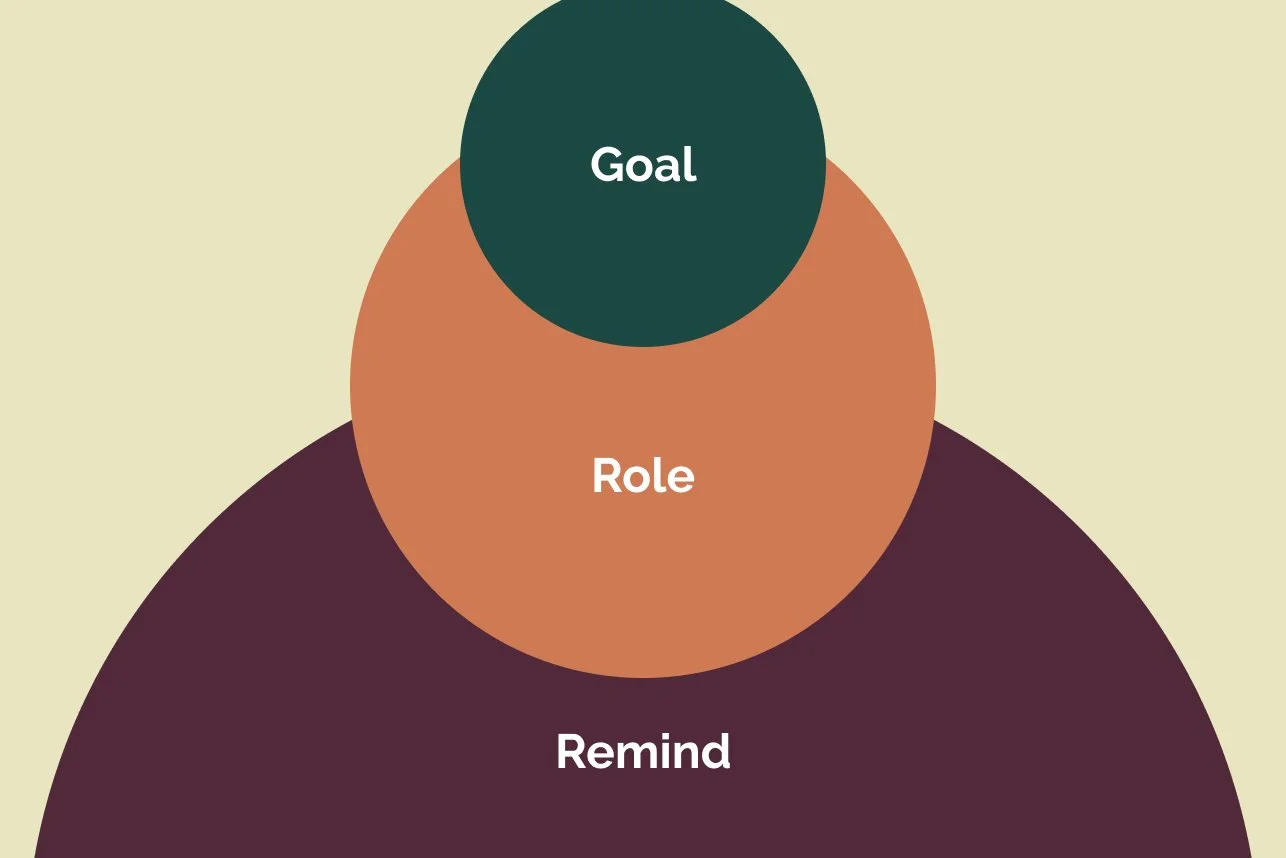
Goal, Role, Remind is one of the seven P16 Principles, and it is the simplest way we know to keep a growing team engaged. It has three parts, in order.
Goal. The bigger business driver. It can be aspirational, such as becoming the most trusted name in your category, or specific, such as doubling revenue by FY30. Either works. What matters is that everyone knows there is a goal and what it is, because people put their energy where they know it will be valued.
Role. How each person's work moves that goal. Some roles move it a lot and some move it a little. Both count, as long as the person can see the connection. Also, one role alone won’t hit a company goal. We need the whole company doing their part to smash it, and everyone should appreciate that.
Remind. Reinforcement through repetition. Remind people of the goal, remind them of their role, and tell them when something they did moved the business closer to it or further away. If you catch it quick, you can catch it small.
When a team is disengaged, one of the three is usually missing. More often than not, it is the third.
Why Remind gets skipped
Setting the goal feels like leadership. Reminding people of it feels like nagging, so leaders say it once, assume it landed and move on.
A goal announced in March is not front of mind at 4pm on a stressful Thursday in July. People need to hear it more than once, and sometimes in a different way, before it shapes what they do. If you lead a team, you will feel like a broken record. That feeling means you are doing it properly.
Remind also lives in the small moments. A quick "nice work, that gets us closer" straight after the fact lands more sustainably than a bonus months later. A kind, in-the-moment "that's not what we're here to do" teaches the team what the goal looks like in practice. This is Catch it quick, catch it small, applied to people.
The signs that Remind has slipped are familiar. Everyone means well but holds a different view of the priorities. Strong performers carry colleagues who have disengaged. Blame starts to creep in, and everyone quietly knows who the problem is.
Try this on Monday
Ask three people in your business, separately, two questions. What are we trying to achieve this year? How does your work help us get there?
If the answers match, keep reminding. If they differ, you have found where to start.
When did your team last hear the goal from you?
Goal, Role, Remind is one of the principles we teach in the Business Growth School, alongside how to set a goal worth repeating.
Frequently Asked Questions
Why is my team busy but not on the same page?
Usually because the business goal was announced once, often at an offsite or planning day, and never linked to each person's role, so everyone works hard on their own version of what matters.
How do I show each employee how their role contributes to our goals?
Name the one business goal, then tell each person in a sentence how their work moves it, such as 'every quote you send within 24 hours lifts our conversion rate', and refer back to that link whenever you discuss their work.
How often should I communicate company goals to my team?
Far more often than feels necessary: A goal announced in March will not be front of mind on a stressful Thursday in July, so people need to hear it more than once, and sometimes in a different way. You should aim to share it at least weekly in team meetings, in every one-on-one, and in the moment when you give feedback. Research on managers shows the effective ones deliberately repeat key messages.
How can I tell if my team actually understands our goals?
Use the Monday test: ask three people separately what the business is trying to achieve this year and how their work helps. If the answers don't match, the goal hasn't landed."
How do I re-engage a disengaged team without nagging?
Make reminders specific instead of repetitive. Connect the goal to the person's role and to a piece of work they've just done, so it feels like recognition and direction, not a lecture."
